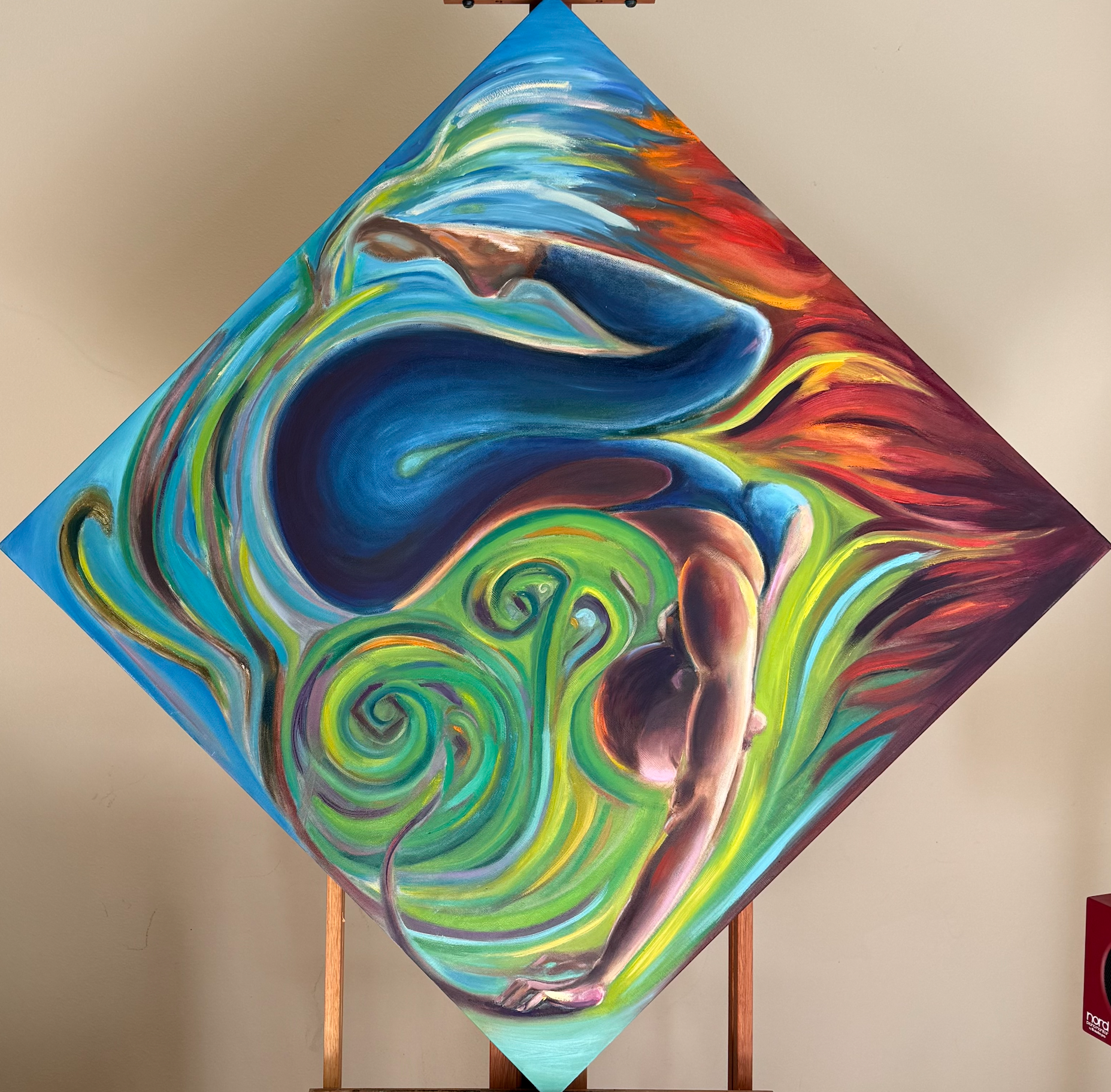
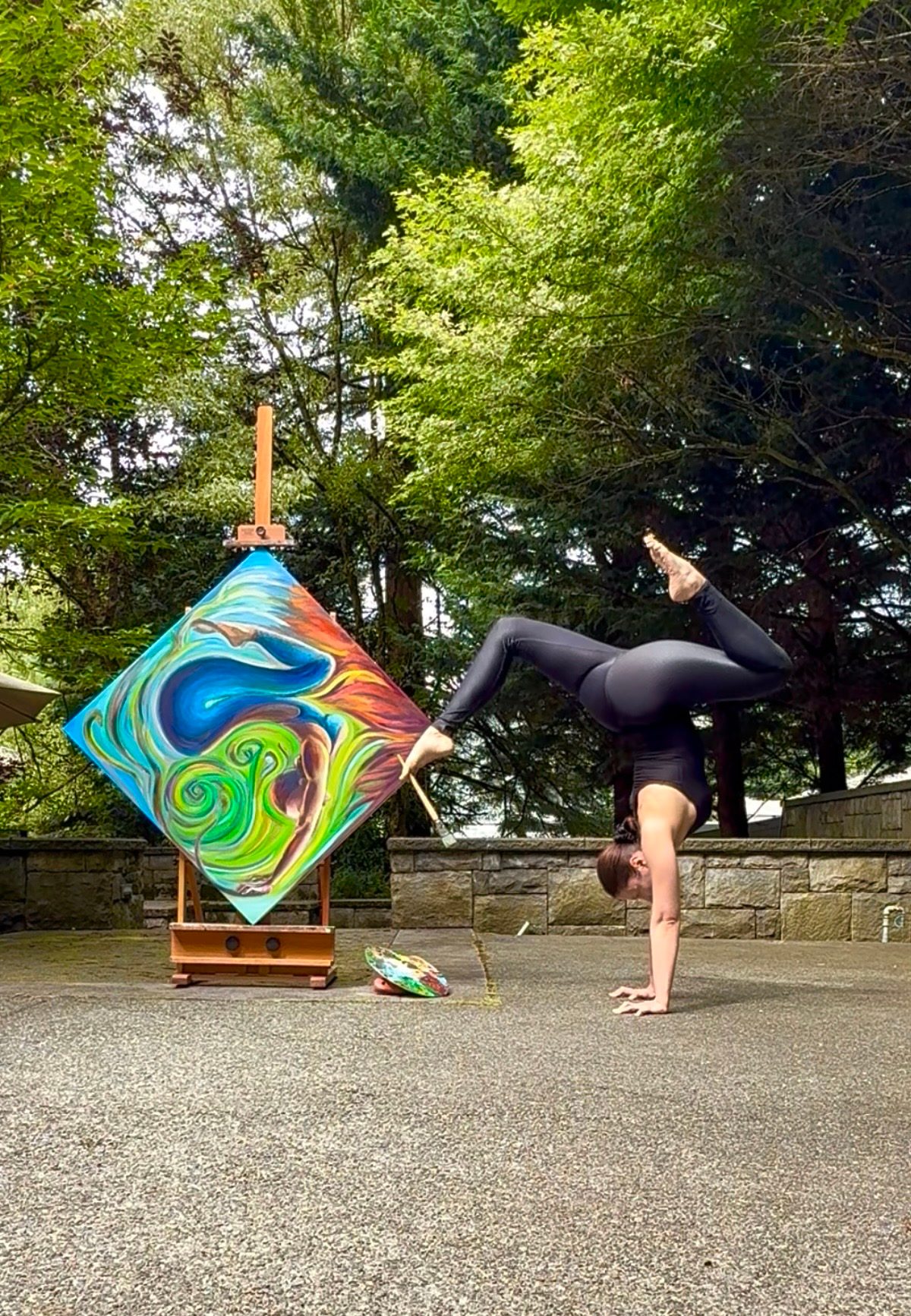
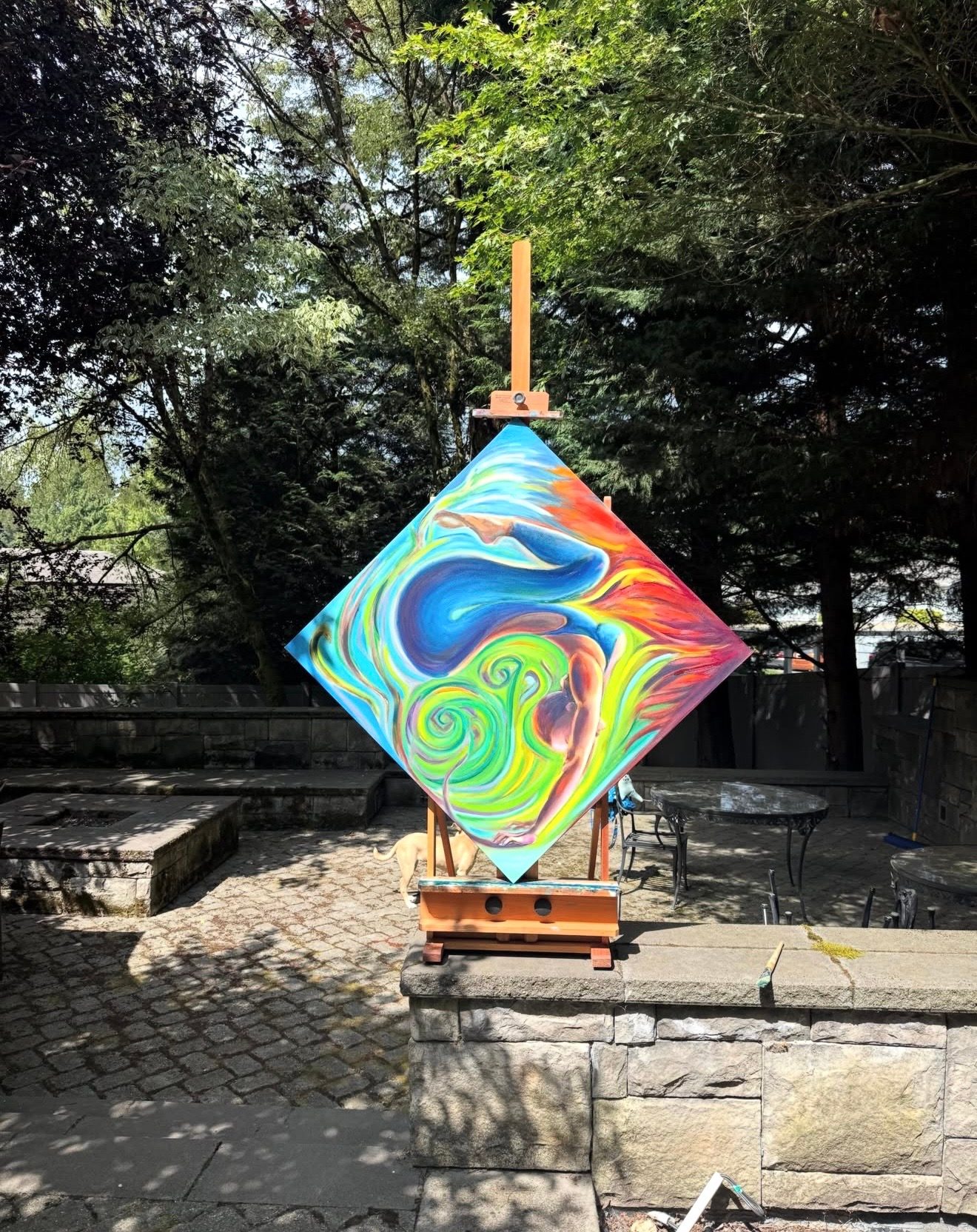
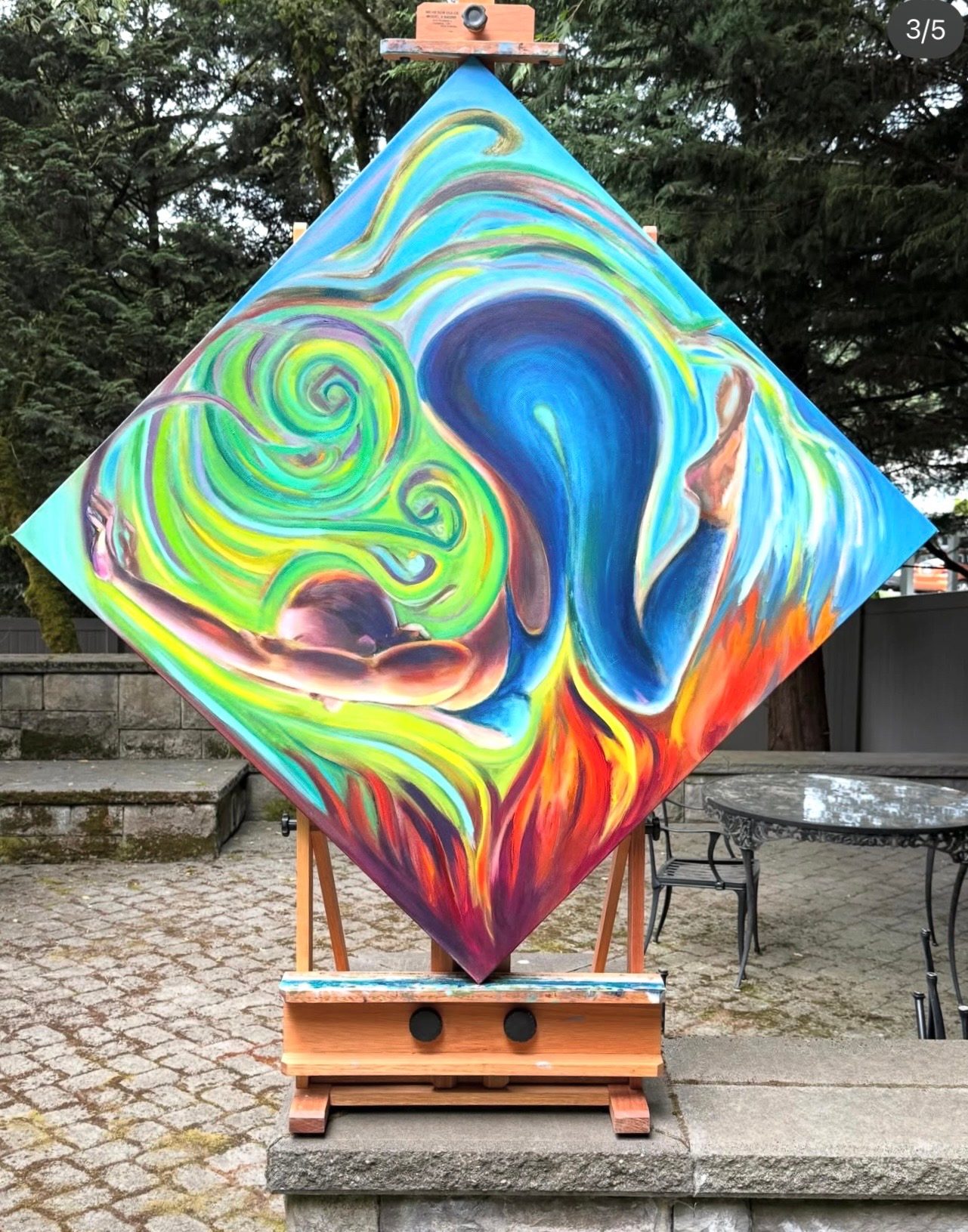
Vertigo
Inquire about this workUpside down, I know exactly where I am
I started gymnastics when I was thirty-three, with no background in sports or dance. I became obsessed with the idea of knowing what it feels like to stand on your hands like a tree—to be there and breathe as if nothing unusual is happening. Except that you are upside down.
It took me two years of almost daily practice to learn how to handstand. But it was never only physical practice. It became an intense mental journey, one in which I had to learn to overcome my ego. There is no place for it when you are balancing on your hands. There is only extreme focus, breath, and your body intertwined with the space around it.
Even in my worst mental states, I would find time to practice. Training gave me a pause. I had taught my mind to become completely present when I was upside down, because otherwise, you simply fall. In that sense, handstands became a kind of strenuous meditation for me. When my dog died, the only moments when grief loosened its grip were while I was training (I would still cry during the rest periods though).
In April 2026, I injured my wrist. Not a big deal, I thought. But weeks passed, then months, and it wasn't getting better. Eventually I had to face the possibility that I might never return to my upside-down world.
I felt tremendous sadness and grief. I had lost not only something I loved, but the place where, for a little while, my mind could become silent and my soul could rest.
But then I realized I hadn't lost that place entirely.I had painting.
I painted Vertigo quickly, in less than a week. But the painting itself had been forming in me for months. All the love and longing for the practice, all the accumulated desire to return to that strange world where the body turns upside down and everything becomes quiet, had been rising in me throughout the time I couldn't practice.
Vertigo came out of that longing.
The surrounding colors are not accidental. I record my workouts so I can assess my form and execution, and I often practice in my garage. In those recordings, my upside-down body is framed by the open garage door and the world outside: green grass directly behind me, blue sky and trees above and to the left, and the red leaves of a Japanese maple to the right.
Here, that familiar view begins to whirl around the inverted body. The ordinary landscape of my practice becomes almost a vortex—movement, color, focus, and the strange sense of orientation I find while being upside down.